Sunday, September 23, 2007


Speaking of Babies...

This is a heads-up about one (of many, I'm sure) organization doing something truly unique and valuable for the kids of Africa, in the name of Christ, The Rafiki Foundation.

In their own words:
The Rafiki Foundation is a Christian organization whose goal is to help Africa’s orphaned and vulnerable children become godly contributors to their communities and the world. It was established in 1985 by Rosemary Jensen and others who desired to help the children of Africa. Rafiki’s plan for Africa has the potential of impacting thousands of children through the establishment of Rafiki Training Villages and Rafiki Satellite Villages.
A little research brought me in contact with very helpful, credible people there, and they come on excellent recommendation.

Friday, September 21, 2007


These Are The Days

My new favorite old song [listen] from my new favorite old artist, Van Morrison.

These are the days of the endless summer
These are the days, the time is now
There is no past, there’s only future
There’s only here, there’s only now

Oh your smiling face, your gracious presence
The fires of spring are kindling bright
Oh the radiant heart and the song of glory
Crying freedom in the night

These are the days by the sparkling river
His timely grace and our treasured find
This is the love of the one magician
Turned the water into wine

These are days of the endless dancing and the
Long walks on the summer night
These are the days of the true romancing
When I’m holding you oh, so tight

These are the days by the sparkling river
His timely grace and our treasured find
This is the love of the one great magician
Turned water into wine

These are the days now that we must savour
And we must enjoy as we can
These are the days that will last forever
You’ve got to hold them in your heart.

Thursday, September 20, 2007

Sunday, September 16, 2007

Welcome N0. 1 Grandson Will!

This is Baby Weekend in our world! At 1:57 p.m. Friday, September 14, Will Benjamin—6 lbs. 13 oz.—made his entrance. He's perfect, beautiful, an absolute joy. Thank you Nikki and Mark, thank you Lord Jesus for the gift of life! Now you have to look at some pictures...

The world's most beautiful baby, just a couple of hours old...

...with the world's most beautiful Grandmother...

...and the shamelessly proud, curmudgeonly Grandpa...

...the glorious new family...

...the thief of all our hearts, Will Benjamin Wallace.


Tuesday, September 04, 2007


Counter-Culturally Relevant

The C.S. Lewis Institute publishes a newsletter/magazine called Knowing and Doing...quarterly, perhaps? Not sure. The current issue features a short but excellent biography of William Wilberforce. You can download the pdf here.

Wilberforce seems to have been able to balance "knowing and doing," the subjective and objective, a substantial evangelical faith within himself and the application of deep convictions to issues in the public square. His witness was powerfully relevant to his culture but never lost it's footing. He suffered the scorn and contempt of popular culture, but doggedly continued his cause against the slave trade (and against the decline of public morals) all of his adult life. So much of what current evangelicalism tells us we need to do in order to be relevant seems to be little more than concession and accommodation to popular culture, not confrontation of it. We want to be liked, and when we're liked—we're relevant.

Tuesday, August 21, 2007

The Irrelevance of Relevance

Over the weekend I picked up and read a short book by Os Guinness, Prophetic Untimeliness: A Challenge to the Idol of Relevance. His premise: that the Evangelical church in America is well on it's way to utter irrelevancy—pretty much due to its relentless and misguided pursuit of relevancy!

It was, by the way, the same old saw (that unless we become more culturally relevant, the church's next generation will be lost) motivating the earliest liberalization and decline of mainline denominational witness in the 1800's, the early 1900's and again in the 1960's, weakening them near unto death. Evangelicals (of whom he is one) says Guinness, are following the same path to the same end.

Anyway, this recent Touchstone article on relevance in preaching offers incisive corroboration. One of several money quotes:
Well, I thought, what word is the right and relevant word depends on what you think relevant. We have no reason to think that what feels relevant to the worldling is actually relevant to his life. We do have reason to believe that what he feels relevant will be that which diverts him from the painful contemplation of his own sins and helps him move along the trajectory he has plotted for himself—to improve, as he understands it, but not to change.
More later.
The Way it Should Be

Once in a while we're offered a ray of hope. Hope that real goodness still exists and something of the American spirit survives in the wake of post-modern societal decay.

Such was the impact of the scene my wife and I came upon the other day during the monsoon rains of August. A sharp depression in the nearby school yard has been created to provide drainage for the adjacent athletic field, and this day it was overwhelmed, filled with a foot and a half of water, forming a wonderful impromptu pond. Circled around it were a handful of drenched 12-year-old boys on bikes. As we passed one of them took his turn riding straight into the middle of it, the look on his face of pure imbecilic joy beaming through the spray.

I felt the pang of vicarious joy and a little envy. That's what boys ought to be doing on a rainy day. Life is still pretty good in America.

Thursday, August 16, 2007

Random Thoughts

1. What happened to Summer? Whenever the sounds of High School marching band nearby begin to float through our yard, we know it's coming to an end. The only comfort is the good feeling I still get when I remember I don't have to go back to school in September!

2. Scout camp is a good thing. My son and I did our week at Many Point Scout Camp in N. Minnesota early this month. A good time had by all.

3. Something else I've learned from DirectTV...the rooftop dish: When storms come through and you need critical weather information from channel X, Y or Z, your dish-connected TV offers this helpful message on an otherwise blank blue screen, "Searching for Satellite Signal." So up go the rabbit ears on the little emergency TV.

4. Some books worth reading include: When I Don't Desire God by John Piper, not the best title (it seems from the title that it might just be a quick spin-off) for an excellent book—a deep, thoughtful treatment of the pursuit of joy in God; The Four Loves by C.S. Lewis is an every-few-years-re-read; The Dangerous Book for Boys by Conn Iggulden and Hal Iggulden is full of cool information and how-to's and stuff to make—the Seven Wonders of the Ancient World, how to skin a rabbit, etc.

5. Van Morrison is cool. The iPod and iTunes have been my ticket to rediscovering old artists that I like more now than I did then.

6. Soon I will be a Grand-dad. Counting down to mid/late September for the birth of the boy-king!

Saturday, July 28, 2007

Join the Emergent Conversation

Begin by learning the language. Here's a helpful glossary to get you started. Some of my favorites:
  • Absolutes - A concept we must absolutely avoid.
  • Atonement - Theory of divine child abuse that appeals to vampire Christians who want Jesus for his blood
  • Authentic - Being one’s real, sinful, doubting self (and proud of it).
  • Bible - A book through which subjective enlightenment comes to us as we live in community.
  • Conversation - Equally confused people guessing what things might be “true” and guessing what “true” might mean.
  • Criticism - 1. Something to which we must be radically open when given by non-Christians. 2. Something to which we must be absolutely closed when given by conservative Christians. 3. Something conservative Christians should accept from us.
These are just a few of the a-b-c's, so grab your half-caf, extra-hot grande (I thought I said "extra hot"... OK?...just bring it to the table) and pull up a chair. Today's topic: authentic missional communities and the urban poor...

Friday, July 27, 2007

Something Other Than a Baby Boomer's Bright Idea

From Frederica Matthews-Green who has carefully documented her path into Eastern Orthodoxy, answering why so many in this generation are attracted to it:
Orthodoxy itself is appealing, I think, initially because it is visibly beautiful, and because it is rooted in something other than a Baby Boomer’s bright idea.
Hear, hear, evangelical and emergent innovators. I might add "or a GenX/Yer's bright idea" , but it's a pretty good working description of the shifting sands beneath American evangelicalism, isn't it? Maybe it's high time for something old.

And a bonus unrelated thought from the great non-baby-boomer curmudgeon/philosopher/theologian/poet Gilbert Keith Chesterton on seeing and appreciating God's world:
[Children] always say, "Do it again"; and the grown-up person does it again until he is nearly dead. For grown-up people are not strong enough to exult in monotony. But perhaps God is strong enough to exult in monotony. It is possible that God says every morning, "Do it again" to the sun; and every evening, "Do it again" to the moon. It may not be automatic necessity that makes all daisies alike; it may be that God makes every daisy separately, but has never got tired of making them. It may be that He has the eternal appetite of infancy: for we have sinned and grown old, and our Father is younger than we.
—From Orthodoxy

Thursday, July 19, 2007


Learning from Luther
I came across this quote from the good doctor regarding the way in which conflict and suffering contribute to a greater understanding and appreciation of the Bible:
For as soon as God's Word becomes known through you, the devil will afflict you, will make a real doctor [teacher of doctrine] of you, and will teach you by his temptations to seek and to love God's Word. For I myself...owe my papists [Roman Catholic adversaries] many thanks for so beating, pressing, and frightening me through the devil's raging, that they have turned me into a fairly good theologian, driving me to a goal I should never have reached.
While I have no hope of becoming a doctor or even a good theologian, I can enthusiastically echo the sentiment. Looking back on a fairly intense struggle with aberrant teaching and practice in a group I found myself in a few years ago, I can now see a corollary benefit to that misery—a greater seeking and love (even desperation) for God's Word. It certainly improved my library, including the three volume edition of What Luther Says, where the above quotation can be found. (3:1360, Concordia, 1959).

Monday, July 09, 2007


My Favorite Live Earth Moment

"Turn the the thermostat down one degree."

—Ludacris

The popular artist offered this when asked for one simple step all of us can take to help the cause and avert environmental destruction. It was in the 90's and humid over most of the country on Saturday, so Mrs. D dutifully walked down the hall and changed our AC setting from 75 to 74. Much better, thank you. Save the planet.

Tuesday, July 03, 2007


Amnesia Helmet Goes to Hillary (again)

I have a feeling that over the next few months they're going to need more mantle space at the Chappaqua manse. These folks have so much to forget.

Today's award-winning statement regarding the Libby matter:

"This commutation sends the clear signal that in this administration, cronyism and ideology trump competence and justice." - Sen. Hillary Rodham Clinton, D-N.Y.

Thursday, June 28, 2007


Trabant Health Care

In a 2007 comparison of socialism and capitalism we enjoy a luxury not available in the earliest days as the contest between these two systems began. We have the perspective of history, and the evidence is in. The icons and detritus of 70-plus years of European experimentation tell the tragi-comic story of centralized economic control, over against the legacy of capitalism and competition.

Despite all its excesses and unfulfilled promises, economic freedom always tends toward greater political freedom and a better quality of life—and better quality stuff—for all. Sadly, the evidence of history is opaque to many on the Hillary Rodham/Obama left. They seem determined and doomed to repeat the worst of it.

Here's a snapshot of the difference. Forget macro-economic theory for a moment and picture instead two iconic German automobiles, side by side, one representing the socialist East and one the democratic West, both created and built by Germans, shown here in their c. 1990 end-of-cold-war editions. The Mercedes, of course, is legendary for quality, performance, luxury and engineering innovation all the world over. Stats are readily available, say no more.

Consider the less widely known East German Trabant.
• under-powered 2 cylinder, 2 cycle engine
• noisy, smelly, polluting
• 0-60 in 21 seconds
• notoriously unreliable brakes
• essentially unchanged over 30 years of production
• in demand, but about all that was available to East Germans outside the Party elite
• acquired by application to be put on a waiting list
• engineered and produced by state-owned monopoly (single-payer manufacturing?)
• competitor of the Yugo

Question: What could possibly cause one group of Germans (as a nation among the most brilliant engineers and industrialists in modern history) to produce something so pathetic while their Western brethren gave us Mercedes, VW, BMW and Audi?

You know the answer. Then think about what'll happen when government monopolizes health care; when the clattering, sputtering, smoke-spewing specially modified Trabant ambulance pulls up to your door...a week late.

Thursday, June 21, 2007


Old Dog Learns New Trick

My lovely bride presented me with one of these as an anniversary gift earlier in the week, and I'm having fun! It's the 8 gig model and I'm told it will hold my entire CD collection. I'm rediscovering some gems as I load them up in iTunes. It also works great for my growing collection of sermons old and new. This is cool.

Sunday, June 17, 2007

Fun With Pronounce-iation In the Midwest

I think it was the great Diana Ross guest-judging on American Idol (whose performance on that show would not have gotten her past round one were she not the great Diana Ross) who admonished the young contenders that in the delivery of a song it is utterly crucial to "pronounce-iate." Apparently nobody told Michael McDonald that back in the '80s.

What I'm offering here is a beginning list of common, locally observed eccentricities and oddities in our use of the language. Lest anybody think I'm on too high a horse, let me assure you I'm a Minnesohtan and I talk like one. I've had a Californian ask me if I was a Canadian (ouch!) and a Floridian inquire about my farming business—after only a brief introduction and minimal conversation. Also, any hypocrisy will be immediately and mercilessly pointed out by those who know me and read this.

So here they are, grouped in beginning categories for your enjoyment and emendation.
(Readers' additions in blue)

Too Many Syllables for Us
probably = probbly
comfortable = kumpfterbull
incidentally = incidently
didn't = dint
shouldn't = shunt

We Want More Syllables
nuclear = nuculer (Jimmy Carter, though not a Midwesterner,
loved to remind us that he was a "nuculuh" physicist)
athletic = athaletic
realty = reelahty and then, of course...
realtor = reelahter
pastoral = pastorial
oriented = orientated
regardless = irregardless

Vowel Trouble
milk = melk
since = sense
pillow = pellow
The short "i" sound bedevils us even to the point of confusion about definitions—for example, insure and ensure are the same word...we're pretty sure).
get = git (The Bumbling Genius notes this as a Southern phenom, but it's ours too.)

Diphthong Difficulties
about = a boat (owing perhaps to a subconscious preoccupation with lakes and fish)
about = a boot (the closer you get to the Canadian border and really nice lakes and fish)
jaguar = jagwire (for the English it's three syllables: jag-you-war...we prefer jagwire)
counselor = cahnseler (our continuing difficulty with vowel combinations)
Incidently, many Minnesotans believe a diphthong to be an immodest swimsuit, inappropriate attire for camp cahnselers or anyone else.

Double (Consonant) Trouble
February = Febuary (that bru is just too hard to say, particularly outdoors in Febuary)
statistics = stastistics (just too dang many s's and t's to keep straight)
espresso = expresso
escape = exscape (thinking, I suppose, of the exit sign under which we make our exscape)
ornament = ordament (maybe we've just always got a head cold)
jewelry = julery

Confusion With Other More Familiar Words
tract = track (some in my son's former youth ministry insisted that the little pamphlets keep you "on track" and are therefore "tracks")
rapport = repore (falls somewhere between the the exotic French "rapport" and our word "report" with which we're more kumpfterbull, so we'll stick with repore)
pundit = pundant, as in "political pundant"
That last one is a little like "pendant", the piece of julery you wear on a chain around your neck. You could never wear a pundit on a chain around your neck—unless maybe Dick Morris or Robert Raiche.

Inexplicable Changes and Additions
NASA = always Nassau, as in Bahamas
et cetera = eck cetera
familiar = fermillyer
valentine = valentime (mostly a Mr. T foible)

Eck Cetera
Not pronunciation per se, but curious usage and habit.
"the thing is..." = "the thing is is..." (We're never quite sure how many verbs-to-be there ought to be in this phrase. One is is is enough.)
old fashioned = old fashion (even when used as an adjective)
loan = borrow "will you borrow me your pencil?"

To be continued. Feel free to add, correct and comment!

Monday, June 11, 2007

What I've Learned from Direct TV

The satellite dish was for us a new window on the world of television and I've learned a number of things since subscribing.

1. That the price per month is never actually as low as promised.

2. That most programming is banal and boring and now I have many more banal and boring options

3. That even without any pay channels or movie channels, television is becoming increasingly corrupt.

4. That some of the most dangerous and corrupt television is to be found on the "Christian" channels. In the name of the Gospel and in the precious name of Christ, every sort of snake oil salesman and peddler and prosperity-gospel polluter and buffoon can now be found on satellite TV, making a mockery of Christ and driving a wedge between the Gospel and those who desperately need to hear it. Christian television is in a sorry state indeed.

God in His providence has made available a variety of assets to the proclamation of His Gospel: Roman roads and the Greek language in the 1st century, improvements in transportation and the printed word throughout the centuries. What an unspeakable tragedy that the unprecedented technological opportunity of broadcasting has been so universally co-opted and squandered by the current scourge of television "evangelists." Believers everywhere need to pray fervently that almost all "Christian" programming as it now is would just simply disappear.

Here is a short but powerful reminder of what's at stake:

Tuesday, May 29, 2007

The Abolition of Man (Continues)

In my previous post and one earlier still, I have been attempting to digest C. S. Lewis's classic, The Abolition of Man. It strikes me thus far that my review of a Lewis chapter tends to get as long as the chapter being reviewed, speaking to that quality of verbal economy present in great writers and often missing in reviewers.

But there are questions worth asking again before going on to the last section of Abolition. What does Lewis, in addressing his generation, have to say to ours? What is the current value of his 60-plus-year-old analysis? What can he possibly offer us?

Maybe the answer is this: Lewis, in his age, was intellectually present at the birth of something important, something very much like the Spirit of Our Age. From a literary and a Christian perspective, he fought against the emptiness of modernism but even more importantly (for us), witnessed the unholy nativity of modernism's child—that which reaches its full stature of immaturity in what some call post-modernism. He predicted the age of self-definition, subjectivism, and relativism that now envelops us, and at the end with its abolition of transcendent values, the abolition of man himself. What he saw so clearly in its infancy now permeates nearly every one of our institutions and threatens to drain our culture of it's remaining moral capital. That's why this old book deserves a new reading.

We live in the adolescence of the values-altered world Lewis envisioned. A culture where unspeakable brutality and inhumanity are routinely justified for the "good of society," where the dominant ethic is that there are no dominant ethics, where rights are arbitrarily given and taken away. The consequences are manifest from Roe v. Wade to Virginia Tech.

But for Christians, there's more. The church, too, has been infected. As modernism eviscerated the witness of mainline American and English churches two generations ago, it is modernism's child that threatens the evangelical church today. Postmodernism has met with theology and produced the Emergent conversation. Subjectivism rules, dogma has disappeared, and what the Bible means can only be imagined in the mind (or heart) of each reader. There are no wrong interpretations.

To ask "Is there truth that applies to all people in all places?" is to ask the wrong question. Rigorous doctrinal debate has been replaced by a conversation that needs no conclusion and is even preferable without one. It's the journey, not the destination that matters, and the optimism we're supposed to feel rings with tragic absurdity; "I have no idea if we're on the right road, but we're making great time!?!"

That's a pretty hasty summary of the Emergent influence and while I'm not denying the legitimacy of some of what Emergent initially reacted against, the spiritual consequences are becoming evident as the post-modern subjectivism that now characterizes the movement sweeps across the evangelical church.

Chesterton said, "There really is only one dangerous thought—the thought that puts a stop to thinking"—the thought (expressed as a proposition!) that abolishes propositions. We are dangerously close to the stoppage of thought. Philosophical absurdity (there is nothing absolutely true...I'm absolutely sure, the only overarching value is that there are no overarching values) first drains man's rationality, then his ethics and finally the soul from his chest.

We should fear something similar in the evangelical church. We're well on our way to draining our ability to teach Christianity, to clearly define godly behavior and what it means to be a Christian. It is increasingly unacceptable to be either precise or dogmatic as to what Christianity includes or excludes—except in the case of doctrinal precision or theological dogmatism. These are always dogmatically and precisely excluded—in the tradition of Lewis's "moral innovators" who exercise prerogatives they deny others. It is unnecessary and humanly impossible to get theology right, and it is wrong to try.

The historic truths of Christianity, the meaning of the Cross itself, is open to individual interpretation as a "generous orthodoxy" becomes extravagant syncretism. How can it be otherwise?

Finally, we in the Church like the larger culture will inevitably face an authority crisis. A vacuum is created when the meanings of clearly written words are privatized, made subjective and blurred into meaninglessness. When the rule of absolute truth is abandoned, the absolute rule of men always takes its place as some sort of totalitarianism fills the void. Chapter 3 of Abolition imagines just such a scenario in society at large. Power will replace principle.

It makes me wonder, as scriptural authority effectively fades within the Church, whether we will soon see an even greater increase in cults of personality, charismatic salespeople offering syncretistic spiritualities and dynamic personal experience, only remotely tethered to biblical texts; or even a new rise of authoritarian cults, where the Word of God is effectively replaced by the "man of God," as desperate people search for something solid to anchor disintegrating lives.

So Lewis helps us here. He certainly makes me think, and he scares me a little.

Developing.
More on the Abolition of Man

A few weeks ago in the wake of the hellish events at Virginia Tech I was drawn back to another old book, The Abolition of Man by C.S. Lewis. It's tiny, only three chapters and an appendix.

The first chapter, Men Without Chests, identified a trend already present in the 1940's toward the privatization of values. Things are not "good" or "beautiful" in themselves, but only felt to be so as they stir corollary sentiments in the minds of individuals. This idea, as it finds its way through common education into the cultural mainstream, has consequences. If I get to define what is Valuable apart from any common standard, I also get to create my own set of ethics. Ethics are the standards of behavior based on some set of ultimate values. If life is universally and inherently valuable, then taking it arbitrarily is inherently unethical. If the value of life is personally determined, I might just assign it a lower importance in certain cases and then feel justified in taking it arbitrarily. Culturally speaking, personally defined values become no values at all.

The future of an essentially value-less culture, says Lewis, is ominous. That and more can be encountered in just the 1st chapter, but he goes on to develop his case, responding again to the authors of The Green Book, a literature study intended for the upper elementary grades. The last part of Lewis's argument (chapter 3, to be addressed later) will imagine in detail the contours of a future adrift from universal ethical moorings.

Chapter 2, The Way follows the trajectory of the Green Book authors' view from its apparent origins through its inconsistent and self-contradictory application. Lewis's provocative opening line:
The practical result of education in the spirit of The Green Book must be the destruction of the society which accepts it.
A great part of Lewis's brilliance, as his fans know, is his ability to bring high philosophical debate down into the language of people like us. In the second chapter he explores the origin of values and the modern trend away from what theologians and philosophers might call foundationalism, the assertion that there are such things as self-evident truths: irreducible, non-debateable assumptions necessary to the process of arriving at our viewpoints.

His concern is not so much the abstract foundations of reason, but what for convenience he calls the "Tao," that set of moral assumptions providing a basis for judgments of value and right behavior; values employed, though not admitted to, even by the moral innovators. Those who deny ultimate values of one kind always end up making their appeal on the basis of assumed values of another kind. It's the usual roundabout. Use what you deny in order to deny it; establish as a fundamental value that there are no fundamental values. Those who tell us there are no ultimate ought-to's are ever insisting that we ought to be as broadminded as they are.
However subjective they may be about some traditional value, [the authors] have shown by the very real act of writing The Green Book that there must be some other values about which they are not subjective at all.
And then:
Their skepticism about values is on the surface: it is for use on other people's values; about the values current in their own set they are not nearly skeptical enough.
Next comes Lewis's analysis of what motivates the modern debunker of the Tao, that foundation of values common to civilized man:
They claim to be cutting away the parasitic growth of emotion, religious sanction, and inherited taboos, in order that 'real' or 'basic' values may emerge.
And from what ground might such real values emerge? Modernism's first answer has always been utilitarian, "good" is what is "good for the community." This of course only begs the question, for we still have to decide what good is for a community and who is obligated to participate in what action that might lead to it.

The second basis usually offered is "instinct." Pare away layers of imposed socialized belief and get down to a "natural" ethic. Man's impulse to preserve himself and his society is all that is needed. But this too is an inadequate and even disingenuous foundation. Inevitably it includes an "ought." We ought to reject certain instinctive impulses and embrace others, once again assuming some part of that higher set of values the debunker is trying so hard to pare away. And what to do when the desire for self-preservation comes into conflict with the obligation to preserve society? Instinctive impulses frequently contradict one another and must be judged according to their comparative dignity—a process not instinctual but again pointing to the Tao, to an external measure of what is worthy of man and what is not. (Lewis develops this further in his more popular Mere Christianity.)

Therefore, lying behind every natural explanation of the development of man's ethics is a more ultimate, assumed set of standards by which ethical propositions and "ethical development" itself must be evaluated. Lewis summarizes:
I draw the following conclusion. This thing I have called for convenience the Tao, and which others may call Natural Law or Traditional Morality or the First Principles of Practical Reason or The First Platitudes, is not one among a series of possible systems of value. It is the source of all value judgment. If it is rejected, all value is rejected. If any value is retained, it is retained.
And then:
An open mind, in questions that are not ultimate, is useful. But an open mind about the ultimate foundations either of Theoretical or Practical Reason is idiocy. If a man's mind is open on these things, let his mouth at least be shut. He can say nothing to the purpose. Outside the Tao there is no ground for criticizing the Tao or anything else.
What Lewis sees as universal elements of the Tao, those fundamental values common to and assumed by people everywhere, he includes in a wonderful appendix, a shorthand anthropological summary worth the price of the book.

Modern reasoning moves inexorably to a new and more precarious level. Maybe our task is this: even as modern science has swept away superstition and supernatural explanations for natural events, so too modern psychology will address outmoded assumptions about sexual morality (always the first on modern and post-modern lists to be jettisoned!) and other creaky, constrictive ideas about value and virtue. Most will demand modernization and even replacement. In fact—maybe we should just start over!
Let us regard all ideas of what we ought to do simply as an interesting psychological survival: let us step right out of all that and start doing what we like. Let us decide for ourselves what man is to be and make him into that: not on any ground of imagined value, but because we want him to be such. Having mastered our environment, let us now master ourselves and choose our own destiny.

This is a very possible position: and those who hold it cannot be accused of self-contradiction like the half-hearted skeptics who still hope to find 'real' values when they have debunked the traditional ones. This is the rejection of the concept of value altogether. I shall need another lecture to consider it.
And he does. Chapter 3, The Abolition of Man imagines the darkness sure to accompany that rejection, some of which is already evident.

To be continued.

Tuesday, May 15, 2007

"Thank You, Mr. DUGG-an"

When you decide to change the name of sole-proprietor business to one that does not include both first and last name (John Doe Widgets to Doe Widgets Unlimited), there are more than a few legal and logistical hoops to jump through. One just cleared this morning was at the bank where, Secretary of State documentation in hand, I successfully made a business checking account name change.

My case was unusual and it took some extra time and phone consultation to determine just what needed to be done. It seems that my account had been opened some time before the bank officer was born and the details of it (and for all I know, I myself) appeared to her quaint, mysterious and as inscrutable as something from the Arthurian legend. The account had been opened in 1983, just after the battle of Agincourt. To her credit, she navigated through the process of updating the ancient records, periodically reminding us both of just how old and odd they were, with the help of a consultant at the other end of the phone line—while repeatedly mispronouncing my name. "Will Mr. DUGG-an remain as a signer if...so where do I indicate DUGG-an Design Group on the form...yes, Mr. DUGG-an will continue to...." And so on.

Now I know that the name Dugan, even with the correct long vowel sound, isn't exactly musical as it rolls off the Irish tongue, and the problem for us is nothing new. But consider this: It was originally spelled with two g's and in a more grammatically rules-conscious age was ever and forgiveably being rendered "DUGG-an," short vowel before double consonant. My father, it is said, took offense and then took action excising the extra letter. In this age his work is to no avail. So at the bank and on the phone it continues. "Hello, this is Kevin at Acme Siding...how are you this evening Mr. DUGG-an?..."

I think the long-vowel-before-single-hard-consonant rule still applies, doesn't it?

If not, I'll just say that my new business name is now LEGG-al, I've signed the forms in DUPP-licate as was my DUTT-y.

You're welcome Ms. JONN-es.

Thursday, May 10, 2007


Amnesia Helmet Award Goes to 2nd Ex-Soviet

From the land of the gulag and the home of the pogrom, speaking from a dais positioned at the tomb of another Vladimir (Lenin, champion of human life), his voice echoing throughout that timeless symbol of human liberty, Red Square, comes this Putin speech likening American foreign policy to that of the Third Reich.
"Moreover, in our time, these threats are not diminishing," he said as he delved into what one expert said was clearly an allusion to U.S. foreign policy. "They are only transforming, changing their appearance. In these new threats - as during the time of the Third Reich - are the same contempt for human life and the same claims of exceptionality and diktat[sic.] in the world."
Congratulations, Vladimir! No need to dwell on the past, or remember that while the contemptible Reich was in its ascendancy, the Stalin/Soviet genocide machine (20 million?40 million??) was quietly and efficiently doing its work—as the Communist Chinese used to say, "depriving of existence" those who opposed them. Or that when Naziism was at last disposed of, it was Moscow orchestrating a network of the most repressive dictatorships in modern history, extending it's iron grip throughout Europe and beyond.

My complaint here is not the preposterous nature of the comparison, but the selective amnesia exercised and expected regarding modern European history. Let him level any criticism against U.S. involvement in continental affairs he wishes, but he should have at least said:
"...as during the time of the Third Reich and our own 70 years of brutal tyranny and jack-boot diplomacy..."

Wednesday, May 02, 2007


A Tale of Two Fridges

I'm not sure what sort of musing this is or why it matters, but every week day I interact with at least two refrigerators and for some reason am reflective on the subject today.

There is the big one at home in the kitchen, and the little one in my office. They both do their jobs, the big Amana more or less as it keeps our beverages almost cold while faithfully freezing the lettuce. I am an American and a patriot but must point out that the Amana is (sadly) American/Union-made, that it required an A.R.M to purchase and that it insolently flings a decorative aluminum molding at my chest every time I slide a gallon of milk off the top shelf.

The little dorm-size Sanyo on the other hand performs with heroic consistency and has done so for (hold on to your chairs) 32 years of almost continuous operation (it was in storage for a very short time). It cost me about a hundred bucks, has humbly served in a dorm, a basement or two and now in my office for nearly 23 years. What a product.
The End Is Near

It's been fun, this Western Civilization thing, but the the signs are everywhere. Here's another.
"Visitors to the Gaia Napa Valley Hotel and Spa won't find the Gideon Bible in the nightstand drawer. Instead, on the bureau will be a copy of ``An Inconvenient Truth,'' former Vice President Al Gore's book about global warming.
Do you think you get more than three squares of recycled tissue (call the desk if you need more)?

Wednesday, April 25, 2007

From First Things

Thanks to sharp eyes on the Bayly Blog, I was reminded of the good stuff to be found in First Things, now linked here. These excerpts come from a recent speech transcribed there, given by Charles J. Chaput, archbishop of Denver.
But Americans now face the same growing spiritual illness that J.R.R. Tolkien, G.K. Chesterton, Christopher Dawson, Romano Guardini, and C.S. Lewis all wrote about in the last century. It’s a loss of hope and purpose that comes from the loss of an interior life and a living faith. It’s a loss that we can only make bearable by creating a culture of material comfort that feeds—and feeds off of—personal selfishness.

Humility is the beginning of sanity. We can’t love anyone else until we can see past ourselves. And man can’t even be man without God. The humility to recognize who we are as creatures, who God is as our Father, what God asks from each of us, and the reality of God’s love for other human persons as well as ourselves—this is the necessary foundation that religion brings to every discussion of free will, justice, and truth, and to every conversation about “the common good.”
And quoting from Frank Sheed:
It’s incredible how long science has succeeded in keeping men’s minds off their fundamental unhappiness and its own very limited power to remedy their fundamental unhappiness. One marvel follows another—electric light, phonograph, motor car, telephone, radio, airplane, television. It’s a curious list, and very pathetic. The soul of man is crying for hope of purpose or meaning; and the scientist says, “Here is a telephone” or “Look, television!”—exactly as one tries to distract a baby crying for its mother by offering it sugar-sticks and making funny faces.

Wednesday, April 18, 2007

Men Without Chests

In the wake of the Virginia carnage, theories and cultural analyses abound. For me it's time to revisit a C.S. Lewis classic The Abolition of Man, 1947 McMillan.

A handful of Christian writers demonstrate that remarkable prescience which makes their decades-old identification of trends more useful than most contemporary analysis. Among them are A.W. Tozer on the church, Francis Schaeffer on culture, and C.S. Lewis on both.

Abolition is a small book beginning with a chapter entititled Men Without Chests. His premise: that in modern culture, a shift was taking place in the education and moral development of children. Rejected as outmoded sentimentality, shared values (common understandings of what is good and beautiful) give way to a subjectivism that leaves all definitions and judgments in the mind of the beholder. While seeming to inoculate students against emotional manipulation by others, the product of this new humanism is inhumanity, a kind of soul-lessness, the abolition of man.

People become merely intellectual and visceral, imagination and appetite, with no "chest," no heart in between to mediate between the two and train the impulses of either. The result in culture is cognitive dissonance. We want (desperately need) people to be good, restrained and controlled in their behavior, understanding and tolerant in their views of others, respectful—in a word, civilized—and yet deny any common, binding definition of what it means to be civilized. In one of his better-known quotes:
And all the time—such is the tragi-comedy of our situation—we continue to clamour for those very qualities we are rendering impossible....We laugh at honour and are shocked to find traitors in our midst. We castrate and bid the geldings be fruitful.
More later as I make my way through this one more time, but when shocking and horrific soul-lessness shows up again as it has in Virginia this week, this is one of the books worth re-reading.

Thursday, April 12, 2007


And the Award Goes to...

Mikhael Gorbachev. For the sincerity, strength and brilliance of this statement regarding the U.S. plan to develop a missile shield to protect Europe from imminent rogue state threats:

"It is all about influence and domination in Europe," Mikhail Gorbachev said. "I believe it is wrong that America did not even bother to consult its NATO allies."

The second Amnesia Helmet [see my 3/14/07 post] is hereby awarded to the former Soviet President who seems to have forgotten that NATO was in fact created to resist the influence and domination of Russia in Europe—and further that untold American time, effort and treasure were and continue to be poured into Europe in order to protect it first from his nation and now from others with similar designs. And of course we all know how much influence we enjoy in Europe today.

Whether all European members were adequately consulted, I don't know. I just find it amusing when deep concerns about the finer points of henhouse security come from a representative of the fox.

He will add this prestigious award to his 1990 Nobel Peace Prize, the Orders of Lenin, and the Red Banner of Labour. You can read all about him at mikhaelgorbachev.org, a site which like all grand socialist experiments promises much but doesn't actually work (at least in my browser).

Monday, April 09, 2007

An Inconvenient View of Global Warming

This piece in Newsweek by an MIT climatologist introduces a note of sanity to the discussion in the mainstream media. Money quote:
The current alarm rests on the false assumption not only that we live in a perfect world, temperaturewise, but also that our warming forecasts for the year 2040 are somehow more reliable than the weatherman's forecast for next week.

Monday, April 02, 2007


C.S. Lewis: Dreamer of Narnia

At long last my daughters and I sat down with this 75 minute documentary feature included with the Chronicles of Narnia DVD. What a delight! It's the story of Lewis's life interwoven with themes and excerpts from all the Narnia books and punctuated with commentary from all sorts of people—literary names to former Oxford students to Douglas Gresham, Lewis's step-son. The visuals include clever animations of the Pauline Baynes original illustrations.

His conversion to Christianity is clearly presented, and much of the "first-person" narration seems to come from his autobiography, Surprised by Joy. Included were a couple of my favorite quotes from that book:
[on Atheism]
I was at this time living, like so many Atheists or Antitheists, in a whirl of contradictions. I maintained that God did not exist. I was also very angry with God for not existing. I was equally angry with Him for creating a world.
[on Atheism and books]
A young man who wishes to remain a sound Atheist cannot be too careful of his reading. There are traps everywhere—"Bibles laid open, millions of surprises," as Herbert says, "fine nets and stratagems." God is, if I may say it, very unscrupulous.
[on his conversion]
You must picture me alone in that room in Magdalen, night after night, feeling, whenever my mind lifted even for a second from my work, the steady, unrelenting approach of Him who I so earnestly desired not to meet. That which I greatly feared had at last come upon me. In the Trinity Term of 1929 I gave in, and admitted that God was God, and knelt and prayed: perhaps, that night, the most dejected and reluctant convert in all England. I did not see then what is now the most shining and obvious thing: the Divine humility which will accept a convert even on such terms.
Highly recommended.

Wednesday, March 21, 2007


The Religion and its Prophet

Here is an interesting perspective offered by the Czech president on the religion of global warming (divine services being held today in the Capitol hearing rooms).

On Pork and Spinach

CAGW (Citizens Against Government Waste) has long been identifying the biggest pork-barrel spenders in Washington and has announced it's Porker of the Month.

"It's easy to make fun of spinach, but if we had eaten more of it, we'd be a stronger society," mused this month's honoree Rep. Sam Farr (D-Calif.) as he added $25,000,000.00 for spinach growers in his district to the U.S. Readiness, Veterans' Health and Iraq Accountability Act of 2007.

Wednesday, March 14, 2007


The Amnesia Helmet Award

This blog will hereafter occasionally bestow the Amnesia Helmet award to worthy nominees. It is a dubious honor just to be nominated, but only a select few will receive the coveted virtual Helmet for their virtual mantels.

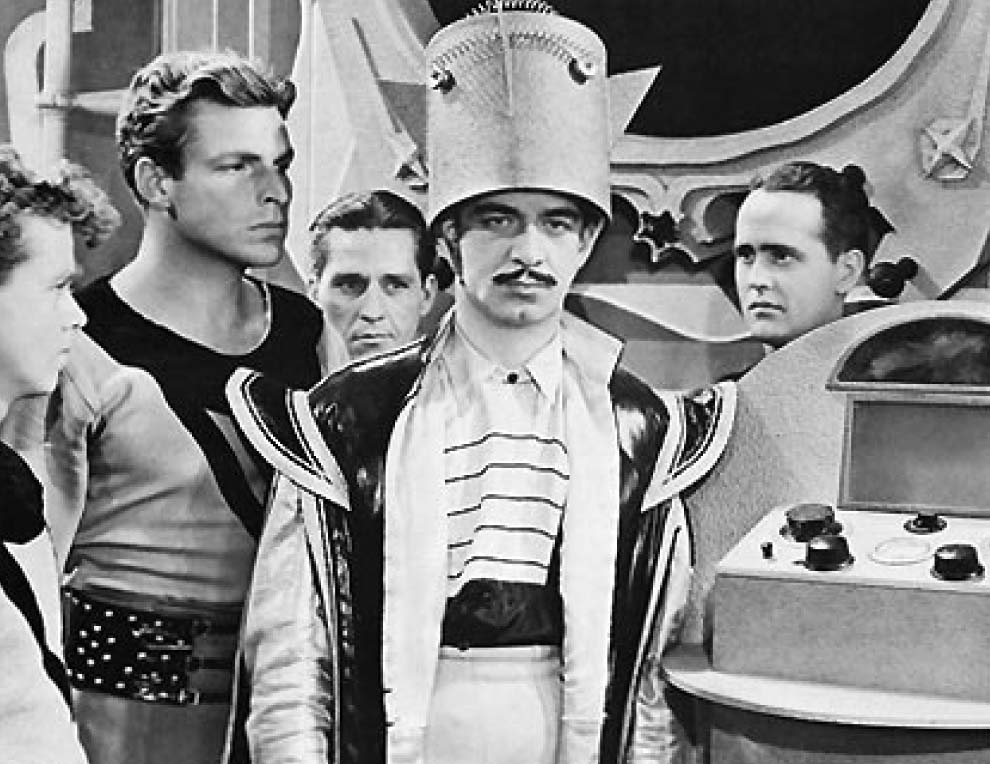
A little history of the concept—explained in an Amazon review of the Buck Rogers 1939 serial: "...Buck Rogers is here to fight Kane's evil domination of mankind, which involves making obedient robots out of folks by strapping an "amnesia helmet" on their heads."

The criteria: The award will be given to those who, like the diabolical Kane, deliberately attempt to strap the helmet on our heads and thus manipulate us, or to those who in selective forgetfulness don it themselves.

My vast readership (members of the Amnesia Academy) is invited to submit nominees at any time. (I know my audience is growing because my profile hits increased from 571 to 585 within a month and only 13 of those new hits were me checking my profile hits.)

The first award goes to Hillary Rodham Clinton for her principled condemnation of the Bush administration firing of 9 U.S. attorneys. It seems that in 1993 the Clintons fired all 93 U.S. attorneys...


Tuesday, March 06, 2007

In Any Language

My dear friend and college room-mate Paul Sunde, with his wife Reiko has been living and working in Japan for many years. He now has a website with a few pictures, a lot of Japanese and a little English, introducing his church. I'm struck by the simplicity, profundity and universality of this line in his message:

"In the beginning God created the heavens and the earth." Genesis 1:1

These are the first words of the Bible. Believing just this one sentence will change your life.

Monday, March 05, 2007

More Smart Guys

The criteria for inclusion in my list of "smart guys" at right are quite uncomplicated.

A candidate must:
1. Agree with me on some important issue.
2. Say it better than I can.
3. On positions that I don't agree with, articulate his or her position (females can be smart guys) clearly.
4. Amuse or intrigue me.
5. Demonstrate the capability of maintaining proper agreement of subject and verb even in difficult cases like "criteria...are quite uncomplicated."

A candidate is disqualified if:
1. He or she embarrasses me by saying something really stupid more than once. Just like eighth grade Phys. Ed. softball, two strikes you're out. We just don't have time for any more, and everybody gets a chance to bat.
2. The word "journey" is anywhere used outside it's clear literal meaning. "My faith journey" would disqualify, for example.
3. I don't like them any more.

I have added a new smart guy, and this post on NAE and global warming meets all the qualifications. Check it out...
The News is Out!

And I could not be more thrilled! And I expect all honor and deferential treatment due my new title and position. Thank You.

Thursday, February 15, 2007

Obamarama!

Ann Coulter's piece on the man whose candidacy has captivated and energized a broad range of Americans—all up and down the Malibu beachfront—is worth the time.

Favorite quote: "Obama made his announcement surrounded by hundreds of adoring Democratic voters. And those were just the reporters."

Monday, February 12, 2007

More Gems from J. Gresham Machen

On the weakened, more culturally attractive view of God and man offered by liberal theology then (1923) and it's current incarnation, the "emergent conversation" today—contrasted with the terrible and joyous purity of the Bible's teaching:

"Religion cannot be made joyful simply by looking on the bright side of God. For a one-sided God is not a real God, and it is the real God alone who can satisfy the longing of our soul...."

"...God's own Son delivered up for us all, freedom from the world, sought by philosophers of all the ages, offered now freely to every simple soul, things hidden from the wise and prudent revealed unto babes, the long striving over, the impossible accomplished, sin conquered by mysterious grace, communion at length with the holy God, our Father which art in heaven."

Surely this and this alone is joy. But it is a joy that is akin to fear. It is a fearful thing to fall into the hands of the living God. Were we not safer with a God of our own devising—love and only love, a Father and nothing else, one before whom we could stand in our own merit without fear? He who will may be satisfied with such a God. But we, God help us—sinful as we are, we would see Jehovah. Despairing, hoping, trembling, half-doubting and half-believing, trusting all to Jesus, we venture into the presence of the very God. And in His presence we live."
—Christianity and Liberalism p.134-135

Go Machen!

Wednesday, February 07, 2007

Recent and Current Reading
If anybody has read any of this, I'd love to hear your impressions or objections.

Recently read:
Above All Earthly Pow'rs by David Wells
Powerful (and readable) analysis of Evangelicalism's drift away from Truth into post-modern fog.
The Dangerous Duty of Delight by John Piper
A little book with a huge chapter on worship that (rightly) contradicts much of what you hear on that subject.
Becoming Conversant with Emergent by D.A. Carson
Makes our emergent friends twitch. Money quote: "Damn all false antitheses to hell." (refuting the notion that for Christians the only alternative to cultural irrelevance is to sail off into the fog of subjectivism with the rest of the culture)
A Series of Unfortunate Events, A Bad Beginning by Lemony Snicket
Trying to figure out why these were so popular with my daughter and others. Sort of figured it out.
Huckleberry Finn by Mark Twain
Must read every few years for me. I heard again recently how some anal-retentive self-appointed societal minders managed to get this removed from yet another school reading list on the charge of racist language. On the contrary, anybody who has encountered HF and does not emerge from every reading with increased sympathy and respect for American blacks, and with exponentially increased contempt for Southern white arrogance and the evil stupidity of racism is dull indeed.
Christianity and Liberalism by J. Gresham Machen 1923
Deja Vu. Mainline protestantism in the early years of the last century introduced the same subjectivism and the same deadly errors for essentially the same reasons as the left wing of Evangelicalism (including but not limited to our emergent friends) finds those disastrous compromises attractive today. A perfect 84 year old counterpoint to last weeks theological news. In the process, Machen sets forth a crystal clear explanation of the Gospel that could be a Doctrine I textbook. Wonderful quote:
"Light may seem at times to be an impertinent intruder, but it is always beneficial in the end. The type of religion which rejoiced in the pious sound of traditional phrases, regardless of their meanings, or shrinks from 'controversial' matters, will never stand amid the shocks of life. In the sphere of religion, as in other spheres, the things about which men are agreed are apt to be the things that are least worth holding; the really important things are the things about which men will fight."
Currently reading:

Crunchy Cons by Rod Dreher
I like a lot of it, jury is still out. He's big on home-schooling...for the right reasons...so I give him credit there. Not sure on his economics.
The Pilgrim's Regress by C.S. Lewis
Every few years on this one. It's making more sense this time around. He really nails Freud and the Spirit of the Age in the 1900s. He's about to have fun with some theologians up on the dry, barren plateau they inhabit.
Aristotle the Barnes and Noble edition
I'm told you have to understand Aristotle to understand Augustine, Thomas Aquinas and early Catholic theology. I don't understand any of them, but I'm going to give this one a go. Just barely started.
Life as a Vapor by John Piper
A series of sweet, succinct meditations that always leave you with something to ponder and/or obey.


Saturday, January 27, 2007

Thanks Be to God for the Local Church

There is a dried soup mix from Great Harvest Bakery sitting on our kitchen counter that reminds me daily what a wonderful thing the local church is.

Ever since Mrs. D, our personal Food Network at the D house, began her painful odyssey from a skating accident through wrist surgery and recovery, it looked like meal generation was largely going to fall into the less-than-capable hands of the resident curmudgeon. A week and a half ago on our school group field trip to Great Harvest Bakery, I picked up that soup mix with the complimentary bag of dinner rolls, thinking it was something I could handle for that evening's meal.

It's still on the counter. Why? Because of the local church. Which one? The one comprised of a whole group of dear Christian family and friends who keep showing up (unsolicited, coordinated "only" by love and the Holy Spirit) with generous (and better) meals. And, I should add, the hard work and burgeoning skills of the resident D kids.

It's now a running joke. "OK dad, when are we gonna make that soup?" We will sooner or later. Maybe Mrs. D will do it. She could one-hand it into shape better than I can with two.

But thanks to all of you (you know who you are) who have been so unbelievably kind.

Monday, January 15, 2007

The Joy of Skating

At last it's cold enough for the rinks to open, and last Friday night at Centennial Lakes it was perfect. Acres of clean ice, the kids in their Christmas ice skates.... For the rest of the story, check out Mrs. D's blog. You also might want to wear some of those rollerblading wrist guards next time out.

Tuesday, January 02, 2007


Amnesia Helmet in Place?

From an Amazon review of the Buck Rogers 1939 serial:
"...Buck Rogers is here to fight Kane's evil domination of mankind, which involves making obedient robots out of folks by strapping an "amnesia helmet" on their heads."

I just thought this was cool. Make up your own biting political or ecclesiological commentary, apply it to anything you like, but whatever you do, resist the evil Kane in 2007.

Friday, December 29, 2006


Old Guy Former Wannabe Musician Hog Heaven

I found this in my stocking on Christmas morning, thank you S.C. and Mrs. D. It's the Eagles Live in Melbourne DVD. My son Chris brought his big screen video projector over to our house this week and connected up to the surround sound. So a couple of nights ago I collapse on the couch in the middle of everything, a front row seat and a "peaceful, easy feeling." I have the second half of the concert yet to look forward to.

Wednesday, December 20, 2006

Approaching Christmas

Christmas is half a week away and here in my office I've just lunched on the leftovers from a Lund's Christmas Breads platter. A salad would have been preferable. This morning we had our annual TDDesign Wednesday Morning Christmas Muffin open house for the people in our building. Lots of folks showed up and we had a great time.

This afternoon, I'm reflecting on several real-life stories from there and elsewhere that have converged in the last couple of days.

One of the guys down the hall, a doctor, held back tears as he told me about his approaching Christmas. Tomorrow he will bring his wife home for the first time since hospitalization and institutional care began last June. She's finally just able to try making it at home. I had picked up from casual "how's business?" conversations earlier that there were some unique stresses in his life, but I had no idea what he's been going through.

From another office party guest came the story of a recent trip to a Liberian orphanage. Letters now arrive from little survivors of that country's chaos. "Dear Daddy Tim, Please pray that somebody will adopt me...."

Yesterday an email entitled "Sad News" arrived from a client of ours in Louisiana. The funeral would be this morning for the 27 year old son of one of the people we work with regularly. Suicide. Can you imagine what Christmas will be like for them this year and in the years to come?

Gosh, my issues don't look like any big deal do they? Should I not approach Christmas with a lot more thankfulness and a lot more compassion than I usually do?

But if you really want to be touched and then be uplifted, read this blogger's December 18th post.

Merry Christmas!

Sunday, December 17, 2006

Lewis on Chronological Snobbery...

The tendency to assume that an idea or practice represents progress just because it's more recent, and a reading person's remedy:
It’s a good rule after reading a new book never to
allow yourself another new one till you have read an
old one in between. If that is too much for you, you
should at least read one old one to three new ones....
Every age has its own outlook. It is especially good
at seeing certain truths and especially liable to make
certain mistakes. We all therefore need the books that
will correct the characteristic mistakes of our own
period.... None of us can fully escape this blindness,
but we shall certainly increase it, and weaken our
guard against it, if we read only modern books....The
only palliative is to keep the clean sea breeze of the
centuries blowing through our minds and this can
only be done by reading old books."

Check out the C.S. Lewis Institute, a new addition to Really Smart Guys, for lots of good stuff.

Friday, December 08, 2006

From the Sacred Sandwich
YOUTH PASTOR OVERSEES NEW MINISTRY FOR "XTREME" ELDERLY

January 2006 --- Hot on the heels of leading a wildly successful, culturally relevant youth group at Keystone Community Church, Youth Pastor Tad Grunholtz has recently created a similar ministry for the elderly in hopes of luring disaffected old people back into church. He calls the group Xtreme Seniors. “A lot of churches today just focus on the younger generation and ignore the elder members of the church,” explained Grunholtz. “But at Keystone, we came to the sudden realization during our last building campaign that old people have all the money. Sure, the youth are the future of the church, but we need a new gymnasium now.”

Using his thriving youth program as a template, Grunholtz has done away with the boring “Golden-Agers” Bible study group that was such a turn-off to many seniors...

Wednesday, December 06, 2006

Thinking More About Church: Part III
You Are Brothers

This leads me naturally to the second text (see Part II) and metaphor that I am drawn to. Seldom quoted, at least in my hearing, a text that answers with real authority the most basic church question. If bridegroom and bride picture the great mystery of what our relationship to Christ is, what is to characterize our relationship to one another?

The New Paradigm
“But you are not to be called rabbi, for you have one teacher, and you are all brothers. And call no man your father on earth for you have one Father, who is in heaven. Neither be called instructors, for you have one instructor, the Christ.” –Matthew 23:8-10 ESV
This is the Lord’s clear and utterly revolutionary statement. In context it represents a defining moment. The veil of the temple will remain intact for only a little while longer, and the priesthood of the old covenant will be no more. There will be one priest and one mediator between God and man, the man Christ Jesus (I Timothy 2:5). This is a shocking new thought for a sacerdotal, priesthood-based religion, and for those sitting “on Moses’s seat” (23:2).

The implications are clear for authority structures as well as for personal salvation. At the very moment when through Christ the relationship between God and man enters a new era, so also changes the role of man to man within the household of God. The change-over will begin at the cross, be completed at the resurrection and experienced fully at the out-pouring of the Holy Spirit on the church at Pentecost.

Practically speaking, Jesus prescribes what it means for human interaction. He begins by showing what that human interaction is not to be like, and the scribes and Pharisees are his exhibit A. They put burdens on others, they do their good deeds to be seen by others, they love the place of honor, the insider greetings in the marketplace, and being called rabbi by others. They are preoccupied with position, with authority, and they lord it over their followers.

“But you are not to be called rabbi...father...instructor...you have one rabbi...one Father...one instructor, the Christ.” The Logos of God, expressed in the word of God, the Bible, under the guidance of the Holy Spirit speaks straight to the heart of the believer.

The Mis-Use of Authority

Many in the church down through the centuries never lost this precious truth. The story of the “Pilgrim Church” in E.H. Broadbent’s classic by that name is a wonderful chronicle of the genuine church’s quiet, humble and faithful history.

But in Europe things had sadly deteriorated by the close of the middle ages. So from this and other texts the Reformers thundered. They called the western church back from what Luther described as its “Babylonian Captivity,” it’s regression into Pharisaical usurpation of spiritual authority. The church, its pope, its bishops and its councils had arrogated to themselves the authority of Holy Spirit and scripture. Their abuses were evident. They had driven a wedge between Christ and his people and the harm to the people of God was serious.

But it’s important to remember what the pretext was for Rome’s exercise of that false authority. The pretext was “purity.” It was their task to protect the church and the gospel from the corruption and the twisting of the faith certain to result if the ignorant masses were permitted to read and interpret the scripture for themselves. In the process they came to see themselves as the exclusive master and teacher of the people and the institution as the "vicar of Christ."

The church’s pastors and leaders had become tyrannical masters, even of the dissemination and interpretation of God’s word. Loyalty to the church became synonymous with loyalty to God. In some of the darkest days in church history that followed, men and women paid with their own blood for suggesting that it should be otherwise.

The Protestant Reformation

A friend of mine said the other day, "We're Protestants? What was it we were protesting? Nothing less than abuse of authority...." I think he's right. Reformers protested vigorously and in the Westminster Confession we have a concise summary of the heart of their message, what came to be known as Sola Scriptura, the doctrine of the final authority of scripture in the life of the believer:

“The Supreme Judge, by which all controversies of religion are to be determined, and all decrees of councils, opinions of ancient writers, doctrines of men, and private spirits, are to be examined, and in whose sentence we are to rest, can be no other but the Holy Spirit speaking in the Scripture.” —Chapter 1, Article 10

Consistent with Jesus’ teaching, this approach to spiritual authority stands in bold contrast to any interpretation that brings a man or a group of men into the position of rabbi, master, master teacher or guru in a local or national or worldwide context.

So What Is the Role of Church Leadership?

Again as in the discussion of the church as bride, questions arise: What about texts that speak of offices of authority within the church? Teachers, shepherds, overseers? What about Paul’s references to being like a father and mother to the Thessalonians, and to Timothy his “son” in the faith? How do these square with Matthew 23? There are hermeneutical starting points that bring things into balance. One is included in the Westminster Confession (1.9) and reminds us to “interpret scripture with scripture.” Read each in the light of the others. Another principle is the interpretation of narrative (story, personal expression, account) in the light of the didactic (clear statement of truth, general instruction, command).

On that basis we might draw the following conclusions. Every relational role or gifted office must be measured by and in the light of Jesus’ clear command. Every administrative function also. Consider Jesus’ categories and the questions to ask of ourselves and our churches:

A gifted teacher is never a rabbi. The term rabbi, sometimes translated “my master,” is pretty close to our idea of “guru” or “spiritual guide” in new age parlance. Though he preaches the Word with “all authority,” his authority for directing the spiritual life of his students goes only as far as scripture speaks and no farther. In their celebrity status or claimed “anointing,” do our teachers assume the posture of something more than a conveyor of what God says in scripture?

Making disciples is a good thing and is our calling, but a discipler is never a master. If a relationship between disciple and mentor is more like servant to master, it is in violation of the New Testament relationship standard. Does the mentoring relationship I’m in require submission and conformity that goes beyond scripture into matters of personal preference and freedom? Even a little bit?

Leadership is necessary for order and ministry to continue, but leaders are not parents. Paul speaks affectionately of Timothy as his son in the faith, but measured against Mt. 23, the Bible never allows for a condescending, patronizing relationship between leaders and congregation, individually or collectively. Any church setting where leadership effectively gives its members a glass of water and sends them off to bed while they (the leaders) have the really important conversations and make the important decisions needs to be re-evaluated.

Of course leaders will meet together and work together uniquely to accomplish their tasks, but they do so with the authority of and in the service of the whole body. There are highly practical implications. Any scenario where the money and property of a church is managed exclusively by the leaders and those they deputize should be watched carefully. All of this flows from a Matthew 23-violating condescension, a parent/child, master/servant assumption unacceptable in the spirit of the new covenant. In my church is there a practice or any tone of parental condescension?

“You are brothers” is the key phrase. Matthew 23 does not deny leadership, eldership, order and discipline within the church. It does, however, establish inviolable boundaries and limits on human authority and reminds us that there are finally to be no real divisions in Christ. The newest believer and the oldest saint are brothers. That’s the starting point of biblical fellowship.

Why Belabor the Obvious?

I’d like to think most of this is pretty clearly understood around Protestantism, but I’m not sure. In the evangelical world we’re clear on the idea of singular papal authority (we don’t accept it), but we do seem inclined to enshrine a thousand little popes and councils and lords and feifdoms instead and allow them similar excesses–again driving an unnecessary wedge between Christ and his bride and between brothers.

No offense intended to faithful men and their ministries, but in some corners the children and step-children of the Pharisees are alive and well. The division between clergy and laity is sometimes too great. The power and anointing assumed borders on presumption. The structure is too Old Testament. Some in the name of reaching the world become cults of celebrity, some in the name of aggressive disciple making become controlling and even cultic. In the spirit of Ephesians 4 and Matthew 23, the church can and will do better. There are fresh and encouraging winds blowing that some have referred to as a “new reformation,” a new discovery of what God can do “through all” the church, the people of God.
“There is one body and one Spirit–just as you were called to the one hope that belongs to your call–one Lord, one faith, one baptism, one God and Father of all, who is over all and through all and in all.”
–Ephesians 4:4-6 ESV

Tuesday, December 05, 2006

New from Another Old Book

Just got my used copy of "Christianity and Liberalism" by J. Gresham Machen (1923) in the mail today. This is a man who drew a line in the sand with his generation's version of Emergent doctrinal ambiquity and outright abandonment of the Gospel in the mainline churches. Have to work so can't read 'til later, but cheated and read the last paragraph first:

"Is there no refuge from strife? Is there no place of refreshing where a man can prepare for the battle of life? Is there no place where two or three can gather in Jesus' name, to forget for the moment all those things that divide nation from nation and race from race, to forget human pride, to forget the passions of war, to forget the puzzling problems of industrial strife, and to unite in overflowing gratitude at the foot of the Cross? If there be such a place, then that is the house of God and that the gate of heaven. And from under the threshold of that house will go forth a river that will revive the weary world."